
Large-scale electrification in Billund. Flexible, low-cost district heating
The case
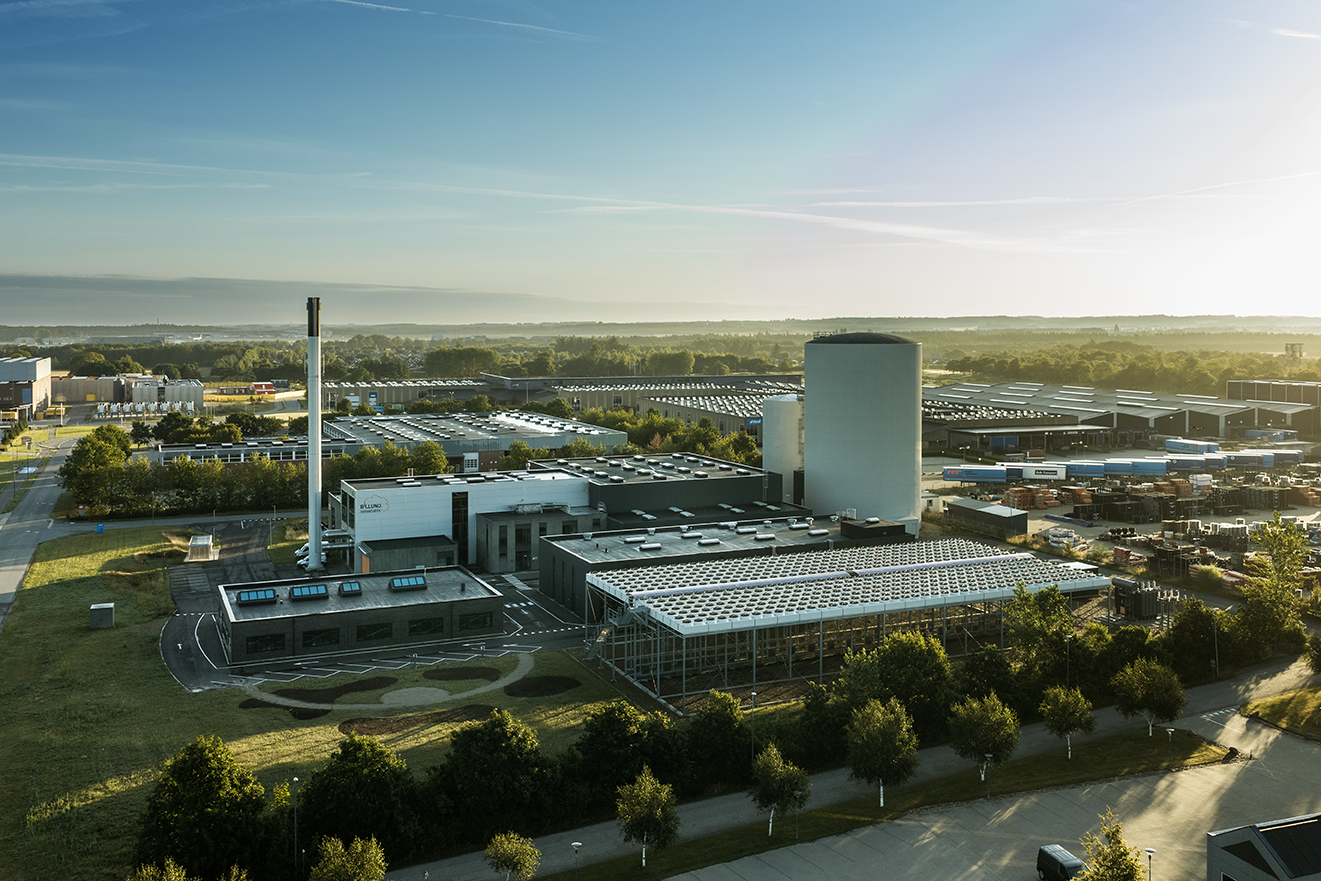
Since the mid-2000s, Billund District Heating (Denmark) has grown from 1,300 to more than 4,200 consumers, including households, businesses and large local industries. Rising demand and a clear call from local companies for more sustainable heat led the utility to make a substantial investment in electrification to future-proof the heat supply.
Billund has converted from 80% biomass-based production (2021) to 80% electricity today, delivered by heat pumps and electric boilers. The utility produces approx. 128,000 MWh per year, with the heat pumps as the primary production source, covering around 70% of the district heating demand.
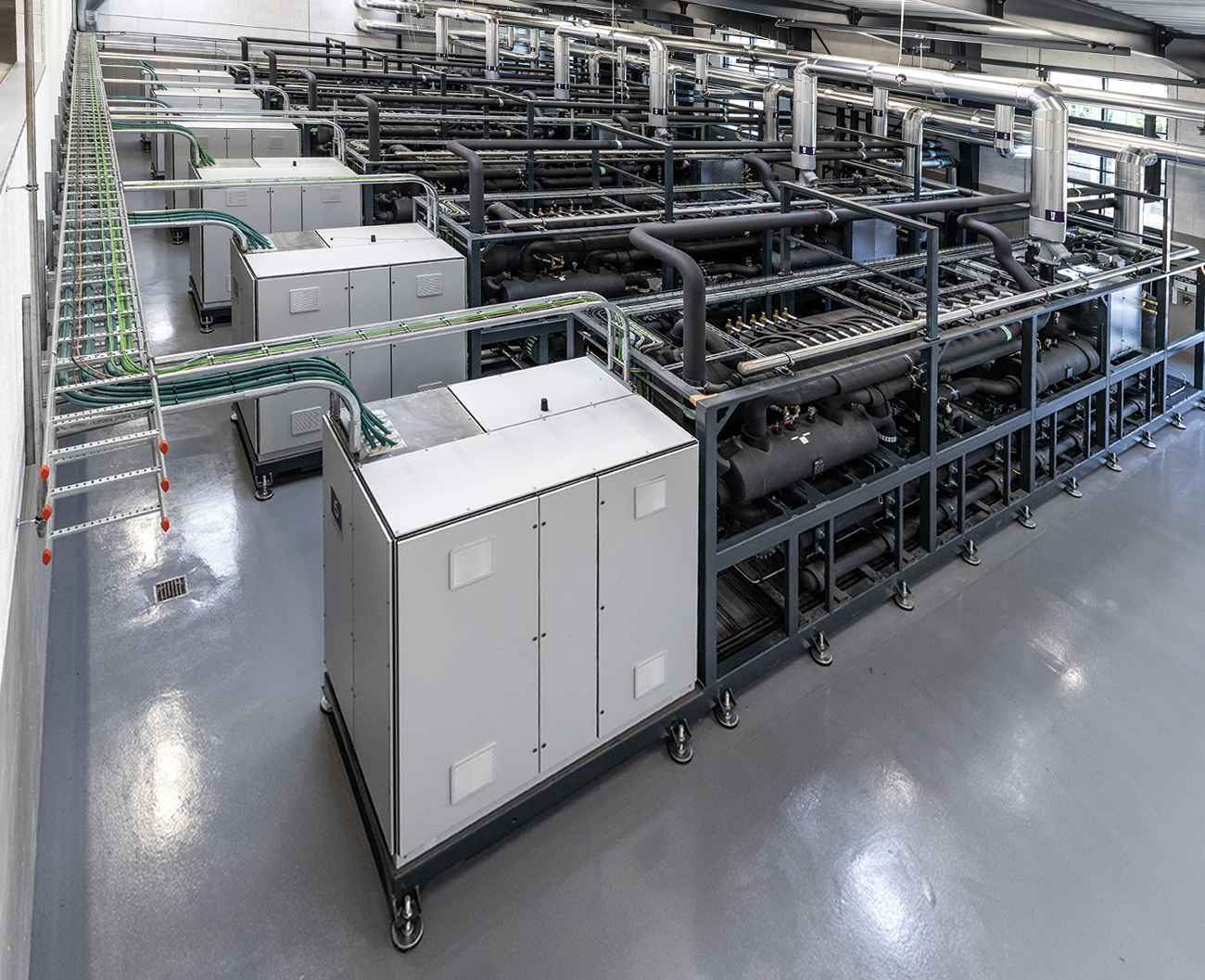
6 x H-2600 units with electrical cabinets in the machine room. Total heating capacity: 16 MW.
The heat pump
At the core of the new installation are six H-2600 air-to-water heat pumps using CO₂ as refrigerant. Together, they deliver 16 MW of heat at 0°C ambient temperature. At the time of installation, this was the world’s largest air-to-water heat pump installation with CO₂ as refrigerant. Outside the new heat pump building, 42 energy collectors (each equipped with 14 fans) capture energy from the ambient air year-round.
Data from a winter’s day in January 2026 shows that at an outdoor temperature of -1.2°C, a single unit delivered 2,759 kW of heat at a supply temperature of 79.7°C - with a COP of 2.86.
In cold and frosty weather, the FENdefrost system ensures efficient defrosting; it monitors pressure, temperature and ice build-up, ensuring the energy collectors keep running without icing up.
Year: 2025
Heat pumps: 6 x H-2600 AW
Application: Air-to-water heat pumps
Heat capacity: 16 MW
(0°C ambient, 37/75°C return/flow)
Refrigerant: CO₂ (R744)
COP: 2.86
(measured in winter operation at -1.2°C)
Energy collectors: 42 units, 14 fans each
Accumulation tank: 14,000 m3
Flexibility and grid balancing
The six heat pumps operate alongside two electric boilers (15 MW and 30 MW) and a 14,000 m³ accumulation tank. This combination allows Billund to produce heat when electricity is cheapest and greenest and store it for later. The tank holds around 700 MWh – equivalent to a week of summer consumption, when demand is mainly hot water, or one cold winter day.
The utility also delivers balancing services (aFRR and mFRR*) to the electricity grid. Both the heat pumps and the electric boilers can be regulated up and down quickly, so production ramps in response to signals from the grid operator – and when electricity prices are very low, the boilers take over more of the heat production. The remuneration from these services covers most of the utility’s electricity purchases, which ultimately secures low heating prices for the consumers in Billund.
*aFRR (automatic Frequency Restoration Reserve) and mFRR (manual Frequency Restoration Reserve) are balancing services that help keep the electricity grid stable at 50 Hz.
aFRR is activated automatically within 5 minutes when production and consumption fall out of balance, while mFRR is activated manually by the grid operator within 12.5 minutes.
Suppliers are paid to make capacity available and adjust their consumption up or down when needed.
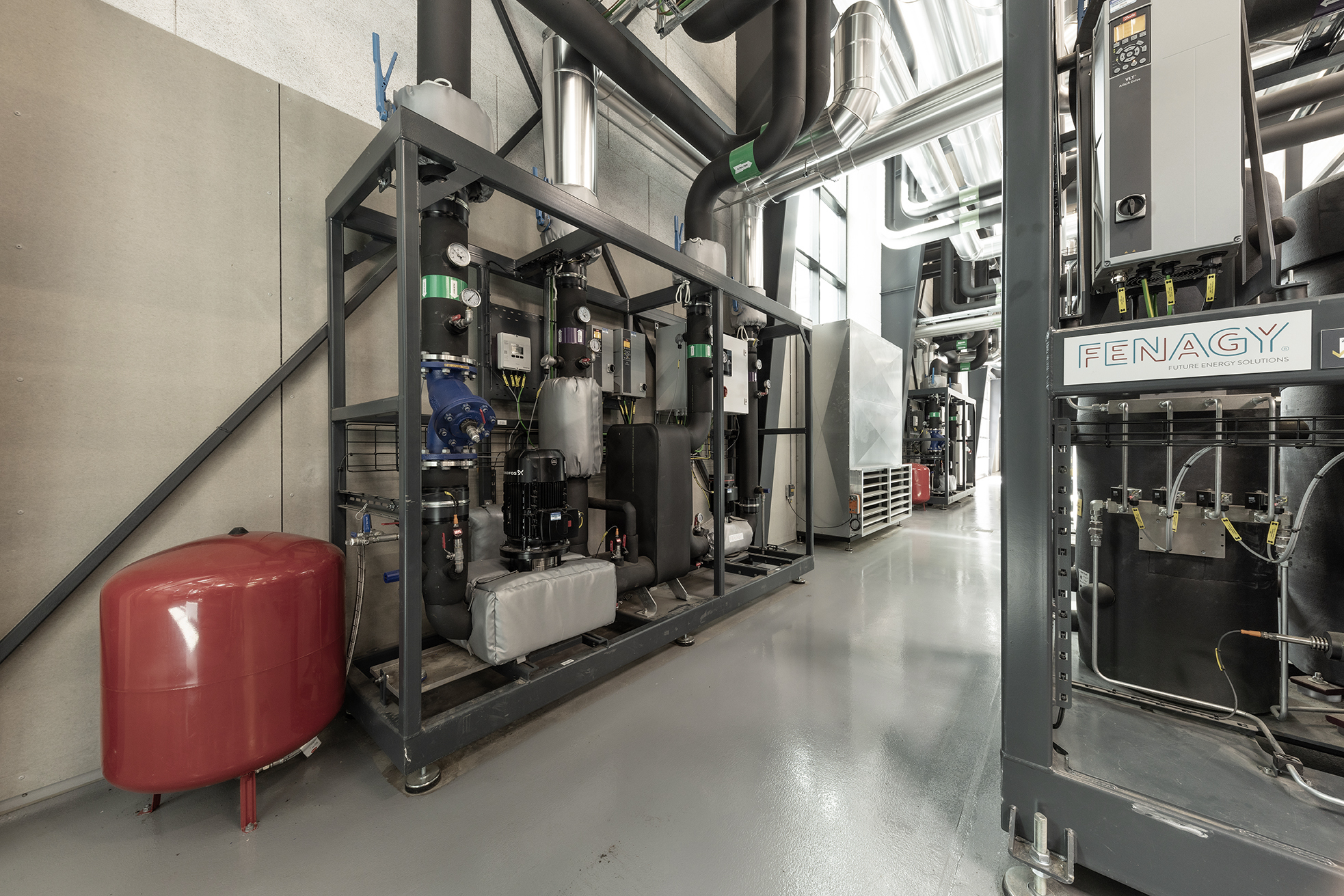
One of three glycol modules -they are operated by the FENdefrost control system with adaptive algorithms that ensure reliable defrosting in cold weather.
CUSTOMER SAYS…
“Working with Fenagy has been marked
by professional expertise, innovation
and a shared ambition to build the district
heating of the future.
Together we have created a plant that
combines high energy efficiency,
security of supply and the green transition
– and at the same time creates value for
our consumers every single day.”
Jens Enevoldsen, CEO
Billund District Heating