
Gas-free district heating year-round - optimisation of pit thermal energy storage
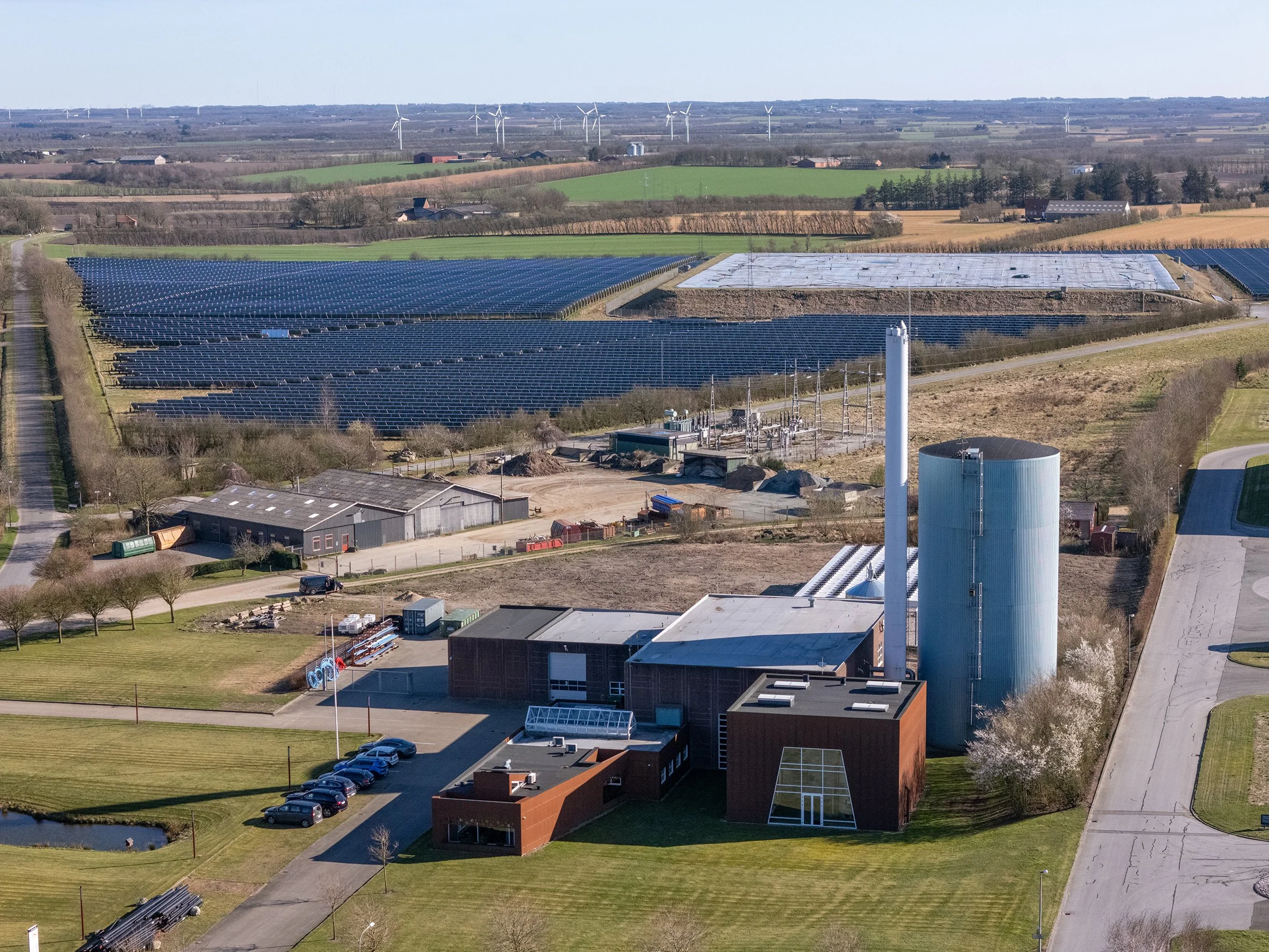
Gram District Heating previously consumed around 752,000 m³ of natural gas per year for heat production. In 2024, the facility invested in two heat pumps as part of its transition away from gas and is now completely gas-independent, with annual CO₂ savings of approximately 1,700 tonnes.
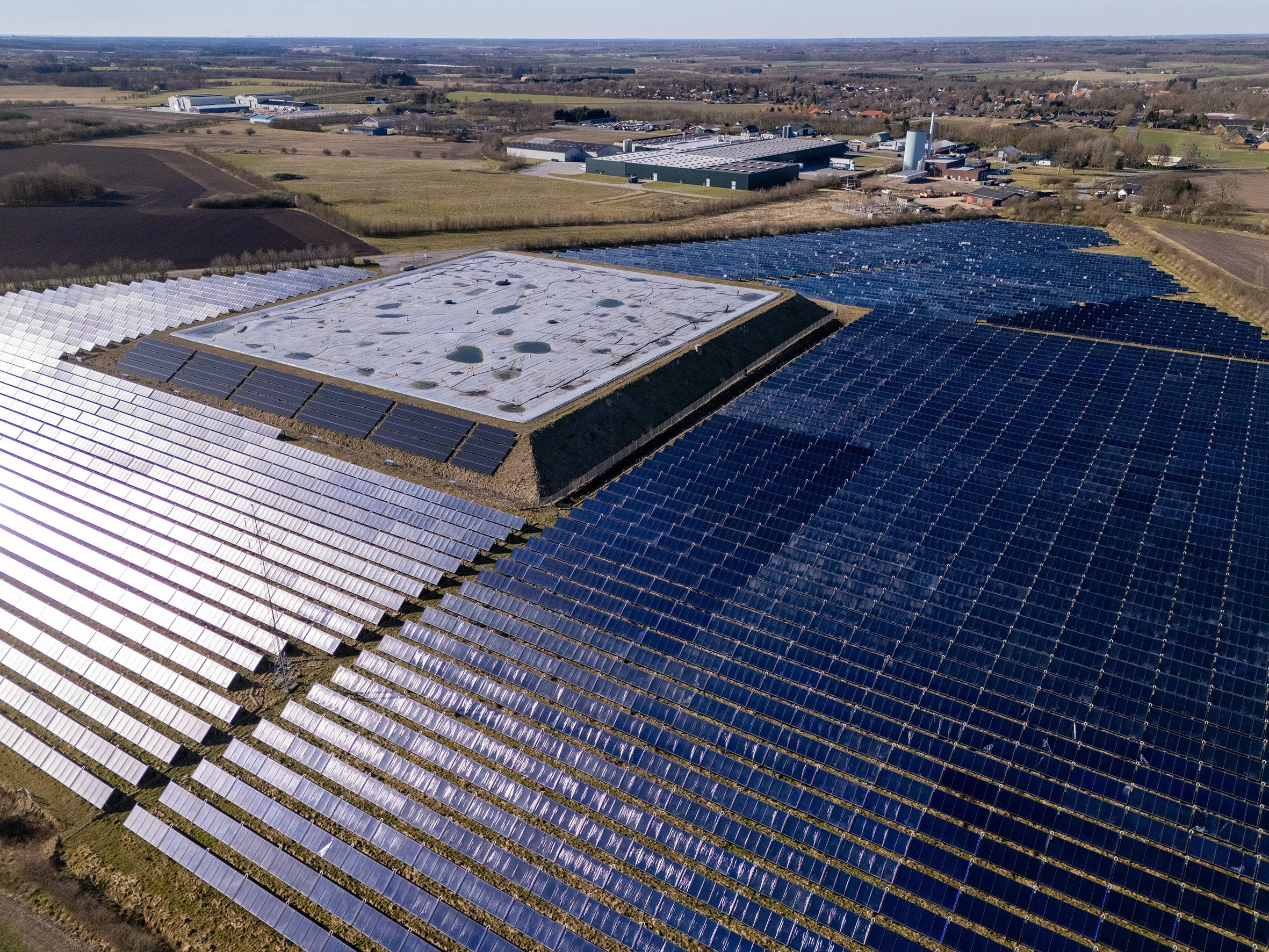
Gram’s large pit thermal energy storage, where a heat pumpnow enables year-round utilisation of stored solar energy.
The challenge
Gram operates a large solar plant with a 122,000 m3 pit thermal energy storage system where hot water for district heating is stored at around 80°C in summer and distributed directly to the district heating network.
The challenge appears later in the season. In autumn and winter, the stored hot water cools down to 45–60°C, low-temperature water. At that point, the water still contains usable energy, but the temperature is too low for direct supply to the district heating network. It needs electric energy to lift the temperature to a supply temperature around 75°C. At the same time, Gram wants the storage water to be cooler again by spring, when solar production resumes, as the solar collectors operate more efficiently with colder water.
The solution
Gram District Heating has invested in two H-1800 heat pumps, using CO2 as refrigerant. One of them is a standard air-to-water heat pump, while the other can shift between air- and water-source operation. During autumn and winter, the utility can then choose between two heat sources: ambient air, via energy collectors (six installed for each heat pump) or extracted heat from the otherwise unusable water in the pit thermal storage, via a chiller module on the heat pump. The CO2 refrigerant can be redirected from the energy collectors to the chiller module to use the pit storage as the heat source. Energy is then extracted from the warmer upper layers of the storage water, typically at 50–60°C, and upgraded to a temperature level that can be used in district heating production.
By exploiting the low-temperature stored water through autumn and winter, Gram gets more value from the stored solar energy, and the pit is left well prepared for spring, where the cooler water improves the operating conditions for the solar collectors.
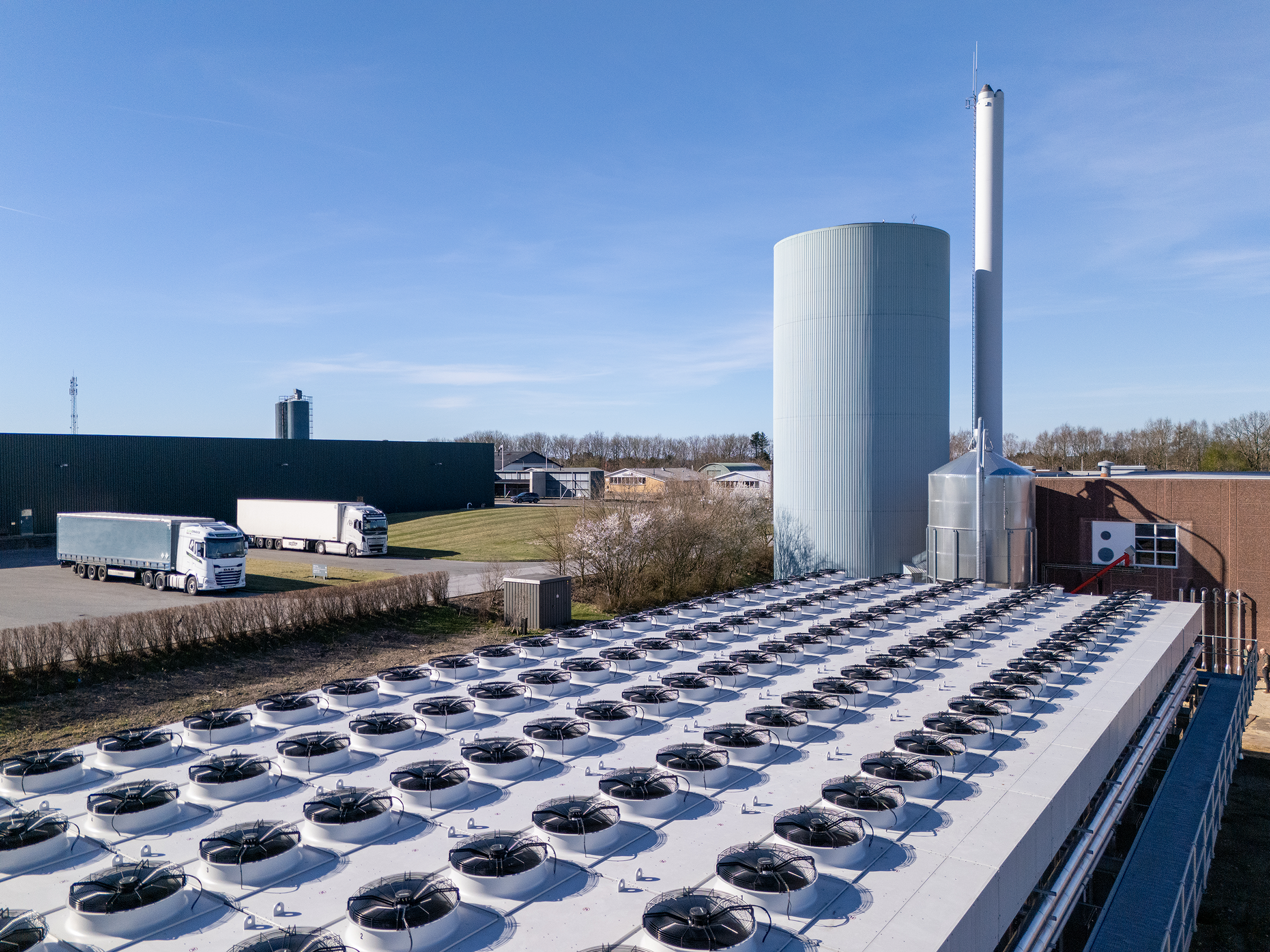
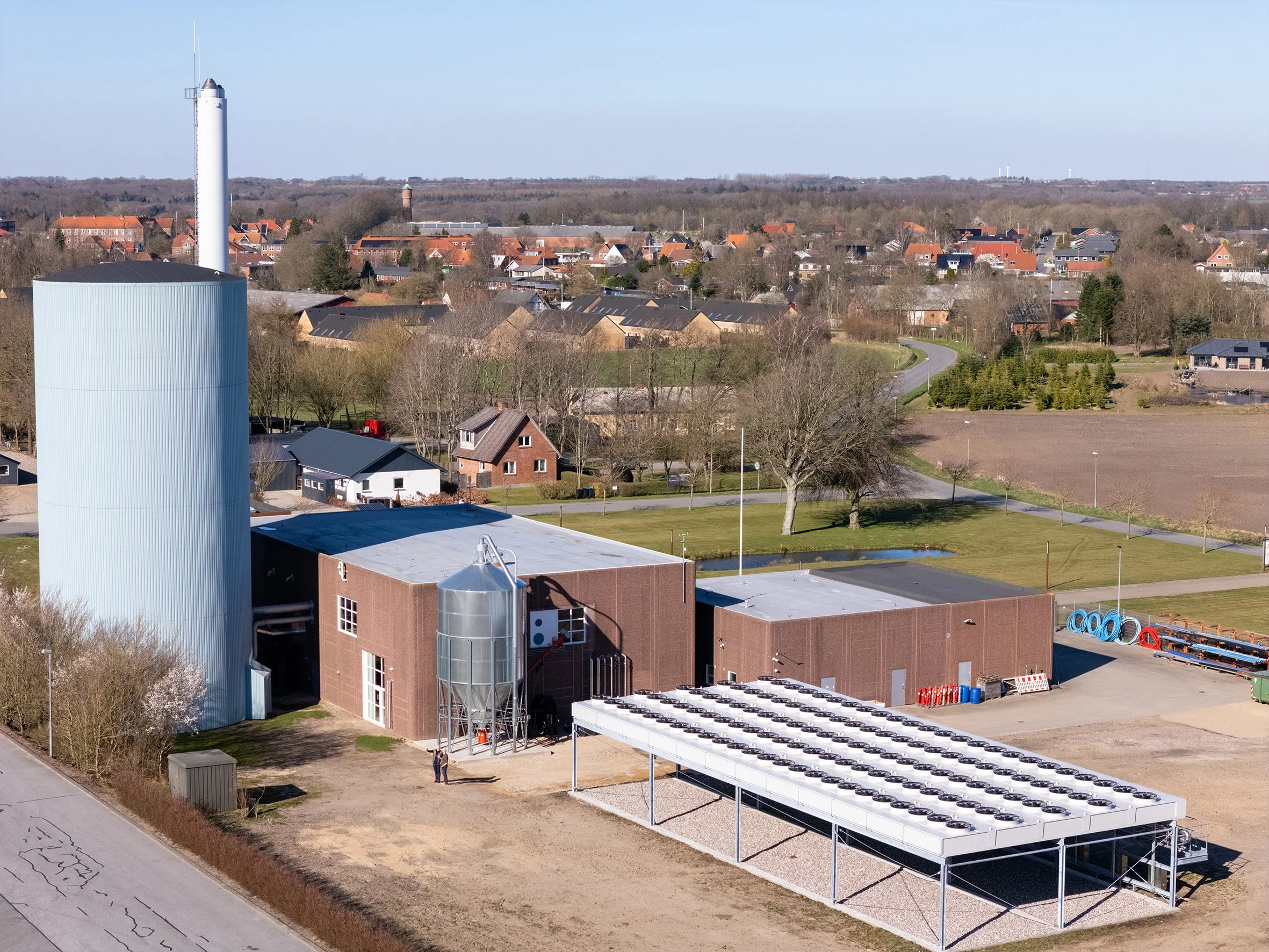
Energy collectors and extra storage tank. During normal operation, the smokestack is no longer used - smoke is only seen when back-up gas boilers are running.
“We decided to invest in heat pumps to support the green transition without increasing the price of heating. The savings on natural gas cover the investment, and we get three times as much heat out of each MW of electricity. The project has progressed smoothly, and the collaboration has been highly satisfactory.”
Lars M. Damkjær · Operations Manager Gram District Heating
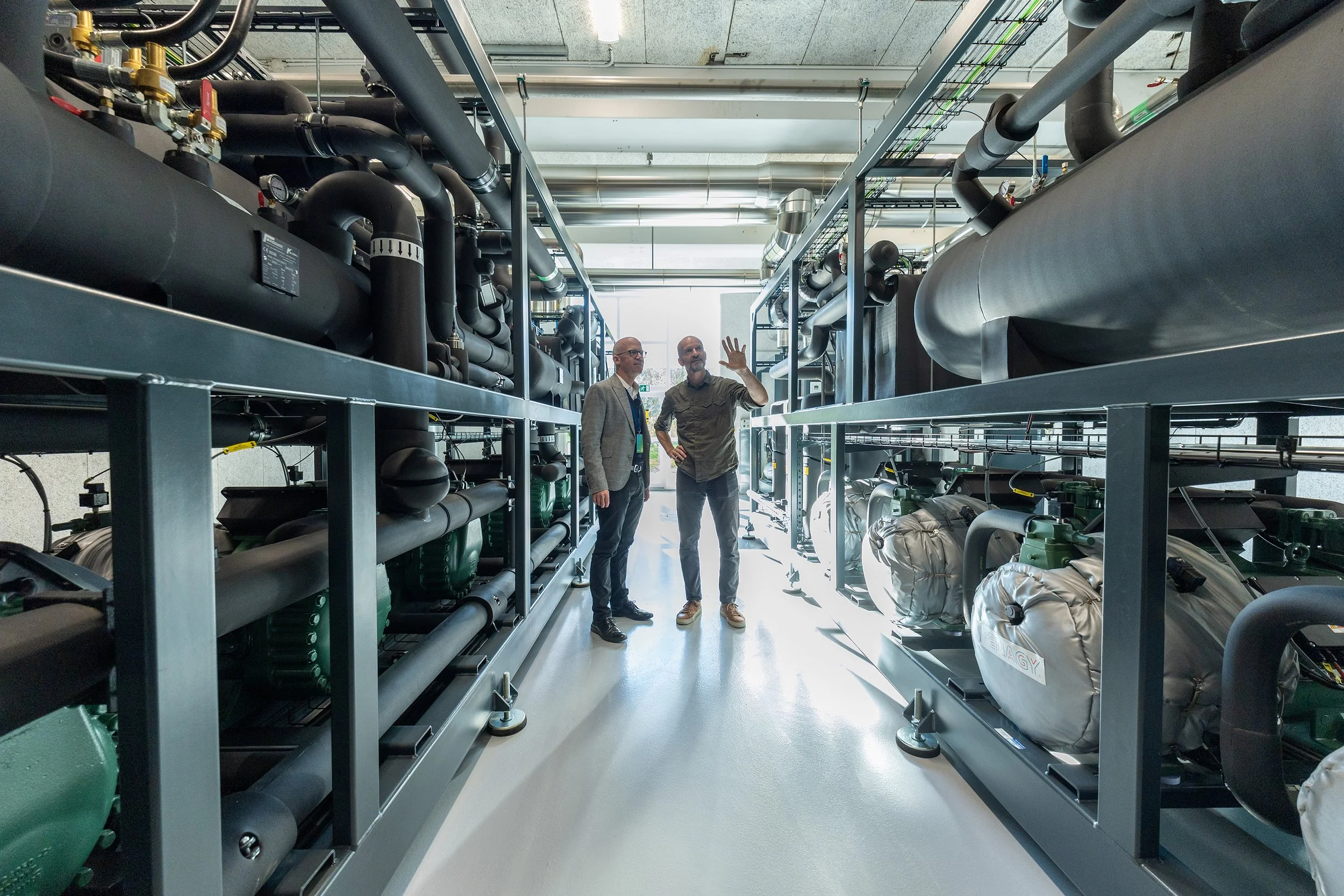
Gram’s two H-1800 heat pumps. One of them can switch between air- and water-source operation.
The result
Gram now has a more flexible system with no gas dependence and optimal year-round use of their existing assets. The old gas engine has been removed and replaced by the new heat pumps and a modern wood pellet boiler. The old gas boiler and the wood pellet boiler are retained solely for peak-load and emergency back-up, ensuring
security of supply.
Year: 2024
Heat pump model: 2 x H-1800
Application: air-to-water & water-to-water
Capacity (heat): 3 MW (5°C ambient, 42/75°C hot water)
COP: 2.8
Defrost method: Glycol
Pit thermal energy storage: 122,000 m³
Solar collectors: 44,800 m²
Additional storage tank: 2300 m3