
Year-round utilisation of pit thermal energy storage
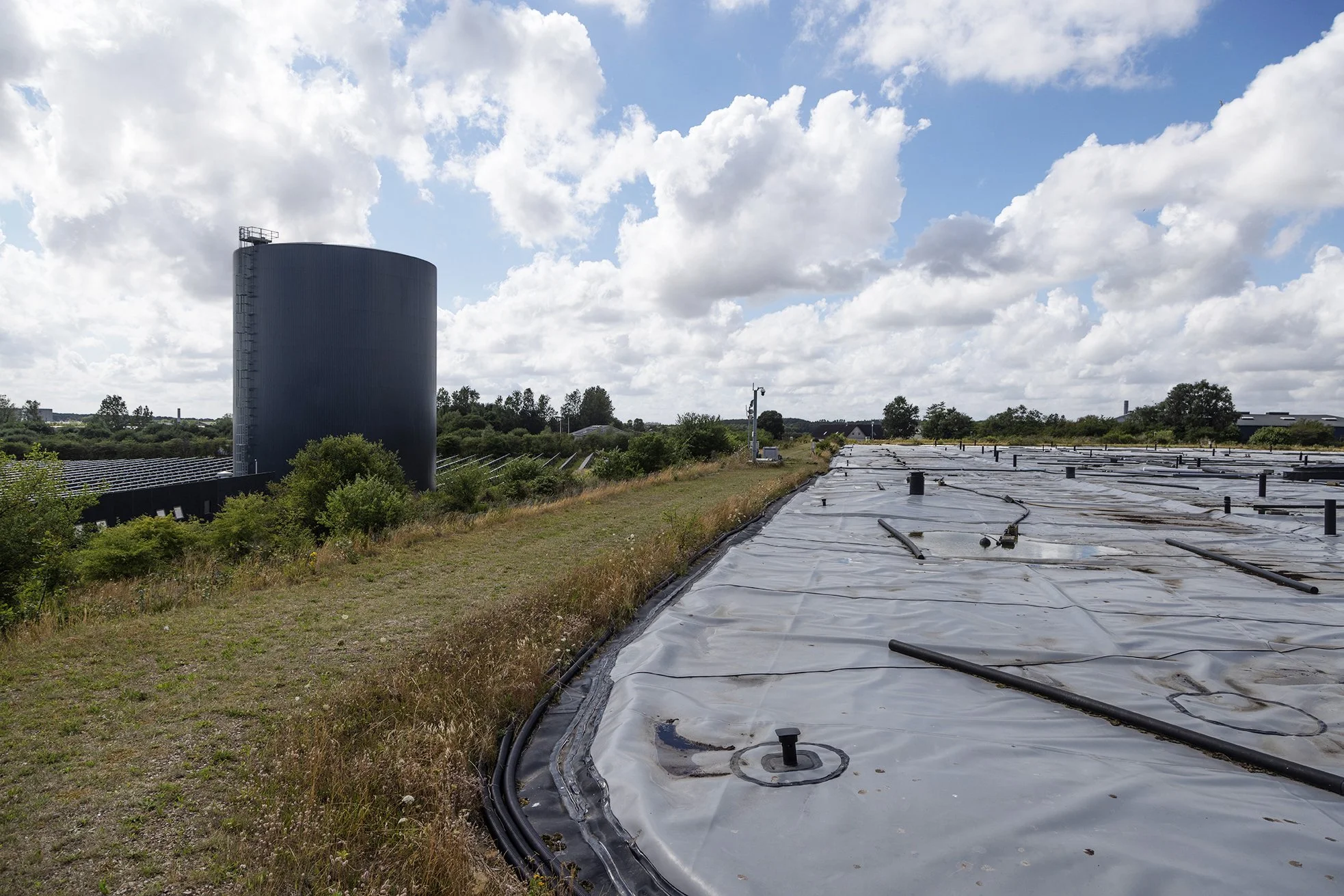

Vojens District Heating’s pit thermal energy storage holds 203,000 m3 of water
Year: 2025
Heat pump model: HCI-4000
Application: water-to-water
Capacity (heat):
Condition 1: 2.6 MW
(40/80°C return/flow, 50/20°C source)
Condition 2: 3.6 MW
(40/80°C return/flow, 50/35°C source)
COP: Up to 5.45
Pit thermal energy storage: 203,000 m3
Solar collectors: 70,000 m2 Accumulation tank: 10,000 m3
Vojens District Heating operates one of the world’s largest pit thermal energy storages – 203,000 m³ of water – which is heated by solar energy over the summer. In winter, the stored solar energy is converted into district heating by a water-to-water heat pump from Fenagy.
The case
The utility’s pit storage is 13 metres deep and stratified, so that the hottest water sits at the top. In summer, the temperature in the uppermost layer reaches 80–85°C, and since 70°C is sufficient for the town’s district heating network, the storage can supply the network directly. Hot water is drawn from the top, while the cooled return water (35–40°C) is sent back into the bottom, so that the stratification is preserved.
Over autumn, the temperature at the top falls to around 60°C. That is too low for direct supply, but the water still holds large amounts of energy. Previously, the temperature was raised with gas boilers once the water reached the town. Today, the gas has been displaced by an HCI-4000 isobutane heat pump, which from October to April upgrades the residual heat in the storage into usable district heating – with a COP of up to 5.45.
The heat pump makes use of the stratification itself: on the cold side, water from the lower layers of the storage is cooled from 40 to 20°C, and the energy extracted lifts water to 85°C, which is stored in a newly built, well-insulated 10,000 m³ accumulation tank. In this way, the storage is emptied completely of residual heat before a new season begins.
From the accumulation tank, the water is delivered to the district heating network at 76°C – and production can be scheduled for the hours when the electricity price is lowest.
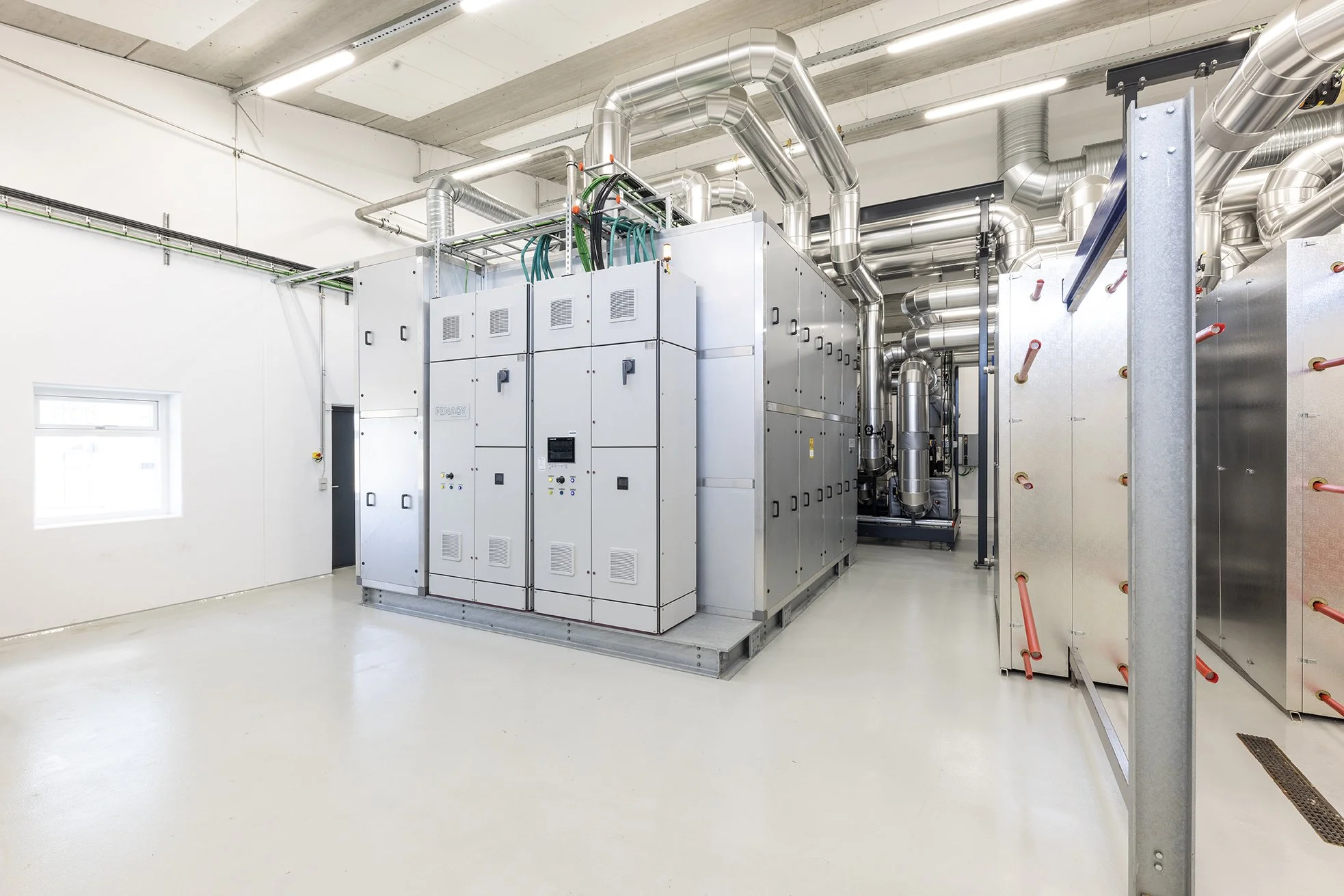
HCI-4000 in a customised design. The heat pump uses isobutane as refrigerant and is therefore enclosed in a cabinet that isolates it from the rest of the machine room.
The heat pump
The heat pump is a customised HCI-4000 water-to-water unit with the natural refrigerant isobutane. It has two powerful screw compressors, each with a swept volume of 2,000 m³/h, allowing the heat pump to produce a total of up to 4 MW of heat under the right operating conditions. The HCI heat pump can deliver temperatures up to 85°C regardless of the return temperature and is therefore ideal for raising the temperature of the low-temperature water in the pit storage, so that it becomes hot enough for district heating.
Because isobutane is flammable, the heat pump is enclosed in a cabinet that isolates it from the rest of the machine room and at the same time serves as an acoustic enclosure. The cabinet is ventilated continuously by an EX-rated fan, which ensures negative pressure and the correct internal temperature in accordance with EN 378.
In the event of an isobutane leak, all power is cut automatically so that there are no ignition sources, and the gas is extracted to the open air. The unit is also fitted with a gas detector and differential pressure monitoring as additional safety measures.
Vojens District Heating is a fine example of how green electricity and seasonally stored solar energy can be converted into efficient and sustainable district heating all year round.
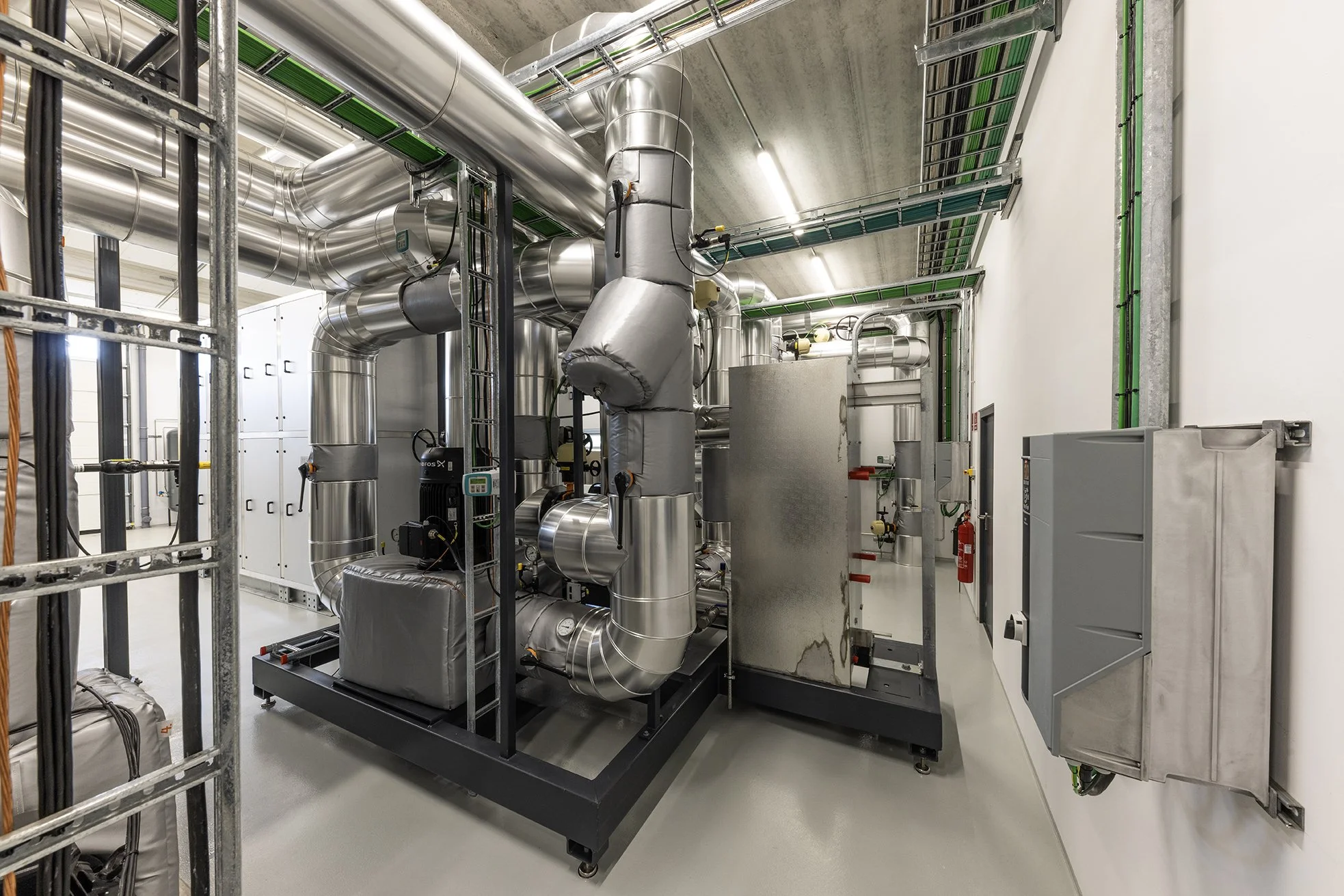
Pump modules in the machine room.
”We chose isobutane as refrigerant
because it is the best match for the
temperatures in our pit thermal energy storage – better than CO₂ and ammonia.
It is a rather new technology, so I was a bit sceptical to begin with, but I have to admit that I am positively surprised. The
calculations we were promised hold up, and the heat pump runs as it should.”
Arne Holm · Managing Director
Vojens District Heating
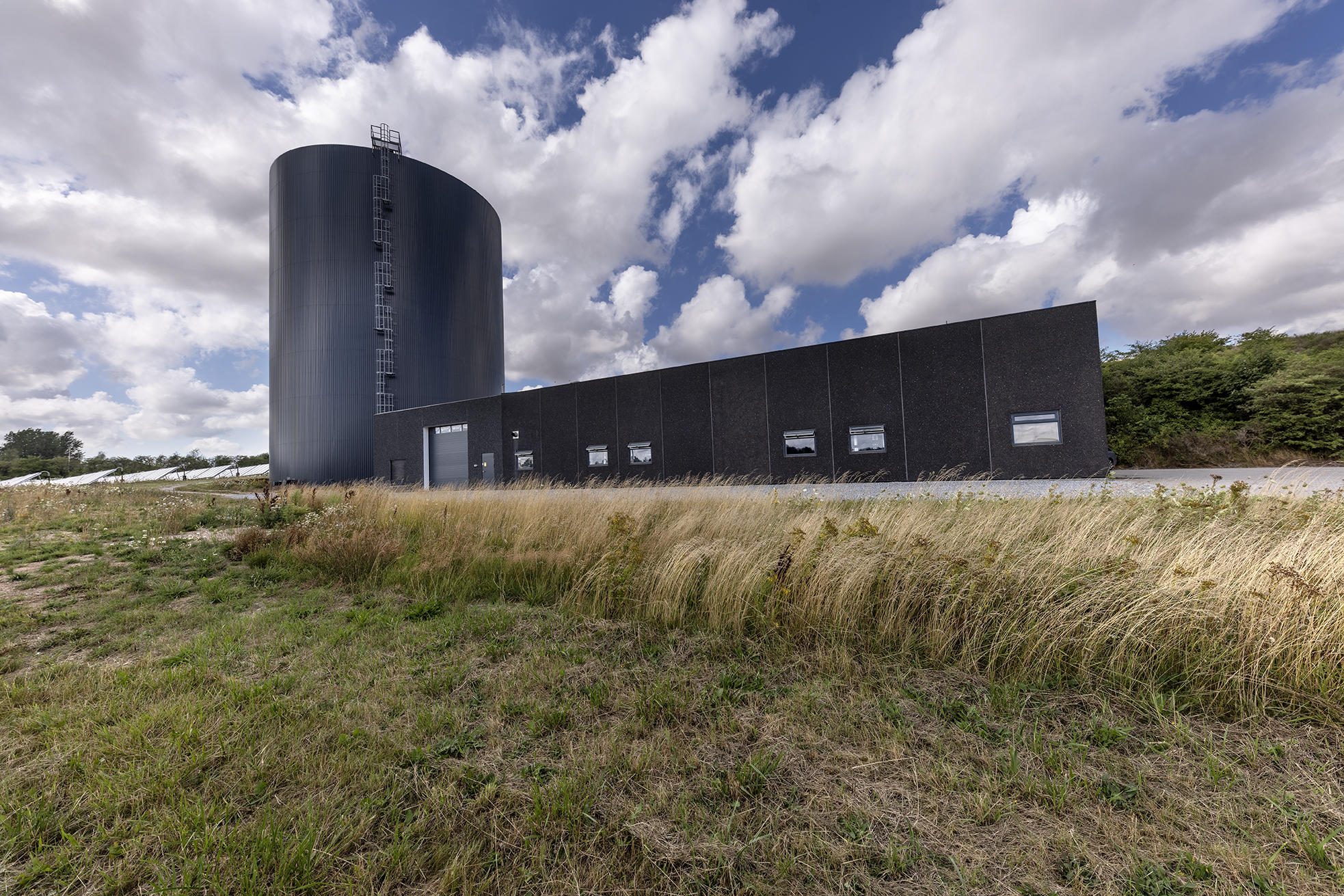
Vojens district heating plant